
When you evaluate deals, you need to look beyond the numbers and try to predict trends which will happen in the city you wish to purchase. If you plan to hold it for 10 years you need to try to forecast what is happening over those 10 years.
Most investors look at important metrics like population growth and job growth. You should also look at wage growth and new housing starts. Sure, this takes a lot of work, and you don’t do this until you’ve worked the numbers, but this is an essential step. Get past that and you look for what I call ‘the gravy’. This is the area that most investors don’t look at, but which gives you the edge – what some call the unfair advantage.
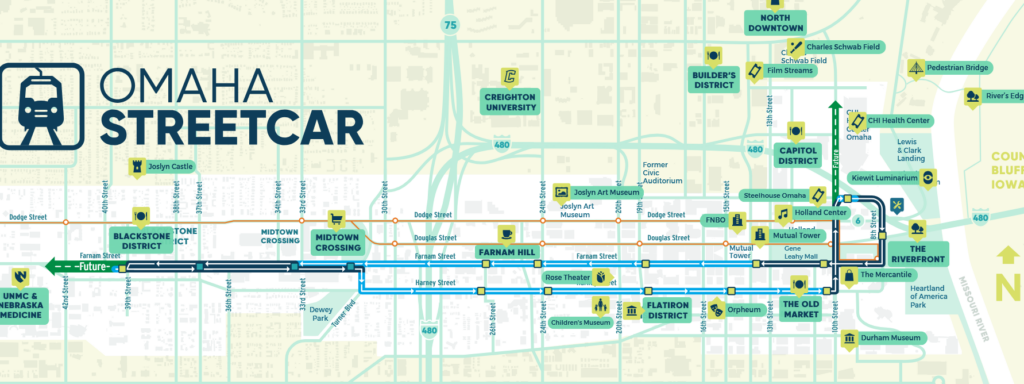
In this post, we will look at a proposed mass transit system in a Midwest city. Whether you are looking in Omaha or somewhere else doesn’t matter. This project is here as an example of how to use it in your underwriting.
The Omaha Streetcar Background
In 2021 the mayor and city council met to build a plan for a light rail transportation system to connect downtown and midtown Omaha. The selling point: economic improvement. It wasn’t billed as a way to move people, rather a way to bring in more dollars into the area’s economy. The streetcar would be modeled after the rail system in Kansas City. It would be free to ride, paid for by property valuation improvement in the influence area, 3 blocks in either direction along the line. This improvement is projected to be an increase of 12%, which might be directly assessed when the project is complete, and resulting in an immediate tax increase.
Some residents are opposed to this, stating it benefits only those in the downtown and midtown area. Even the great Oracle himself, Warren Buffett, has spoken against the project. It moves forward, but is by no means guaranteed.
Benefits to Investors
If an investor can purchase a property within walking distance of the streetcar, they might see a big value increase in the property, as the desirability will likely go up. Many residents will want to live near a streetcar stop so they can easily reach downtown or the local hospital for work. They might not need to have a vehicle and this could be very appealing.
Risks to Investors
Putting value on a possible future value-add which the investor doesn’t control is dangerously close to speculation, but it’s a great illustration of how risk influences prices. The more likely the project is to be completed, the more sellers will place a premium on their valuation, and the less upside for the buyer. Getting in early carries more risk if the project isn’t ultimately completed, but the pricing will be lower. This is why I call this the gravy. It really can’t be valued much into the purchase price because of its uncertainty. If it ends up happening, the income is gravy. If not, the project can still work based on its fundamentals.
That property tax increase might not actually translate to an increase in sale price or rent increase. If rents don’t increase but property tax does, the project can be underwater very quickly. Additionally, political climate, cost overruns, economic downturns can have an effect on the streetcar.
Where is the Project Now?
In Omaha, rail is currently being laid, which is a very good indicator that it will be finished sometime. It was originally projected to be completed in 2026, but now it is still 2 years out. Prices for everything are soaring and it’s not inconceivable that some new administration at the local or state level could decide to cut their losses and discontinue the project. That would be a huge unrecovered loss and probably be bad for reelection, so it’s more likely that the rail stops might be moved or the line truncated in some way. There’s still many ways for this to go belly up, and a buyer needs to be wary.
No matter where you are looking to make your investment, you should look for these gravy value-adds and put them into your final underwriting. There is risk involved, but if there was no risk, everyone would be in the game.